DAX Annual Conference
Data Science and AI Exchange (DAX), formerly known as Data Science Day, is the flagship annual event at the Data Science Institute.
DAX 2026 brought together leaders from academia, industry, and government to explore the opportunities and challenges of deploying AI responsibly. Responsible AI builds confidence across the broader ecosystem and creates the conditions for sustainable innovation, effective risk management, and long-term value. DAX 2026 examined how these principles are being put into practice, highlighting the research and ideas that enable organizations to harness AI's power responsibly.
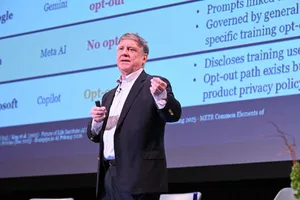
Keynote Address: How Consumers Will Drive the Success of AI and How We Can Help Them
Bob Hedges
Retired Global Chief Data Officer, Visa, and Research Fellow, MIT’s Initiative for the Digital Economy
In his keynote, Bob Hedges, highlighted the ways that some companies have been using data and AI in ways that take advantage of consumers rather than serve them. As a result, many consumers are skeptical of the incredible technical innovations of the last few years, and how companies and industries are using these new technologies and tools. According to Hedges, when companies use consumer data without explicit permission, track across apps, aggressively target messaging, or apply dynamic pricing, it erodes consumer trust in both companies and AI systems in general.
In this high-energy talk, Bob made the case for putting consumers back at the center of innovation, and recognizing that it can be better business for companies to think about how to add value for consumers, not extract value from them.

Session 1: Privacy & Security
Kelly Moan
Chief Information Security Officer, Cyber Command
Omar Santos
Distinguished Engineer Cisco Product Security Incident Response Team (PSIRT) Security Research and Operations
Rachel Cummings
Associate Professor, Industrial Engineering and Operations Research; Affiliate, Department of Computer Science; Co-chair of Cybersecurity Research Center, Data Science Institute, Columbia University
Rebecca Wright
Druckenmiller Professor of Computer Science and Director of the Vagelos Computational Science Center, Barnard College
Moderator: Kara Miller, Host, It Turns Out Podcast
The rush of investment in agentic AI requires ensuring these tools still maintain essential privacy and security safeguards. Both companies and researchers need to be sure they're carving out time to be proactive about creating innovative security and privacy features that increase trust and can preserve the advantages of AI tools, not only reacting to after-the-fact harms.
Because keeping up with every aspect of AI's development in real-time is unrealistic, the panel addressed the need to be strategic and also collaborative in working towards security solutions. Perhaps most importantly, the increasing need for interdisciplinary work means that even experts in a given field need to get comfortable saying, “I don’t know,” when facing new technology, new security risks, or new challenges.

Session 2: Safety & Agentic AI
Brittny Cantor
Agentic Commerce Lead, Accenture's Center for Advanced AI
Eugene Wu
Associate Professor of Computer Science and Co-director of the Data, Agents, and Processes Lab (DAPLab), Columbia University
Ranjan Roy
VP Industry Lead - Retail, Writer
Zhou Yu
Associate Professor, Computer Science Department, and Co-director of the Data, Agents, and Processes Lab (DAPLab), Columbia University
Moderator: Kara Miller, Host, It Turns Out Podcast
We don’t know what AI agents are going to do when we set them loose–but we also don’t know how humans are going to put those agents to use. Despite the exciting tasks that agentic AI can accomplish in demos, it's crucial to recognize that such systems are not truly reliable enough for safe use in most professional or personal environments.
This panel's robust conversation explored how to balance the excitement about the future potential of AI agents with the real challenges of making sure they actually do what we intend. Panelists also pointed out that even agents designed with explicitly beneficial intent can create real risk–and that they can also be deployed maliciously. Not only do we not know exactly what will happen when we put AI agents to work, we can't know all the ways humans will choose to use them–underscoring the need makes safety testing and guardrail development a core focus.
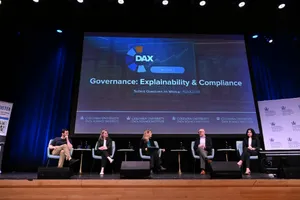
Session 3: Governance: Explainability & Compliance
Buka Gurgenidze-Steinau
Head of Centralized Intelligence and Automation for Enterprise Infrastructure,
Memorial Sloan Kettering Cancer Center
Alessandro Petroni
Head of Quality Engineering - Fraud Payment Services, The Clearing House
Talia Gillis
Daniel G. Ross Professor of Law, Columbia Law School
Micah Goldblum
Assistant Professor, Department of Electrical Engineering, Columbia University
Moderator: Kara Miller, Host, It Turns Out Podcast
How can we create effective governance systems for AI technologies that we don’t fully understand? On the one hand, we often can't fully understand why humans behave the way they do. On the other hand, we have much clearer laws and regulations around what happens when a human breaks the rules.
This panel zoomed in on the problem of how to regulate technology when both the general public and lawmakers often lack sufficient understanding to design governance that is both feasible and appropriate. One key approach the panel identified is making sure that data and AI literacy is foregrounded in both education and professional development, while still making progress towards real governance that ensures the viability of these technologies in the long-term.
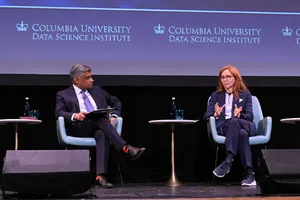
Fireside Chat: Responsible AI
Francesca Rossi
IBM Fellow and the IBM Global Leader for Responsible AI and AI Governance, T.J. Watson IBM Research Lab, New York, and Lecturer, MS in Technology, Columbia University School of Professional Studies
In this thoughtful conversation, Francesca Rossi emphasized that responsible AI development is not just a "good thing" for companies to do, but is actually a core requirement for long-term business success. While some critics contend that responsible tech threatens to slow down innovation, Rossi emphasized that truly responsible technology development ensures innovation is sustainable. This allows AI innovations to build durable value for companies–not short-term returns followed by new or unexpected costs. Globally, Rossi said,companies that devote more resources and people and to responsible tech are also more successful. Rather than treating ethical considerations as an afterthought, Rossi highlighted that developing a clear ethical culture towards AI development throughout your company is key to building more effective, efficient, and higher-value businesses.
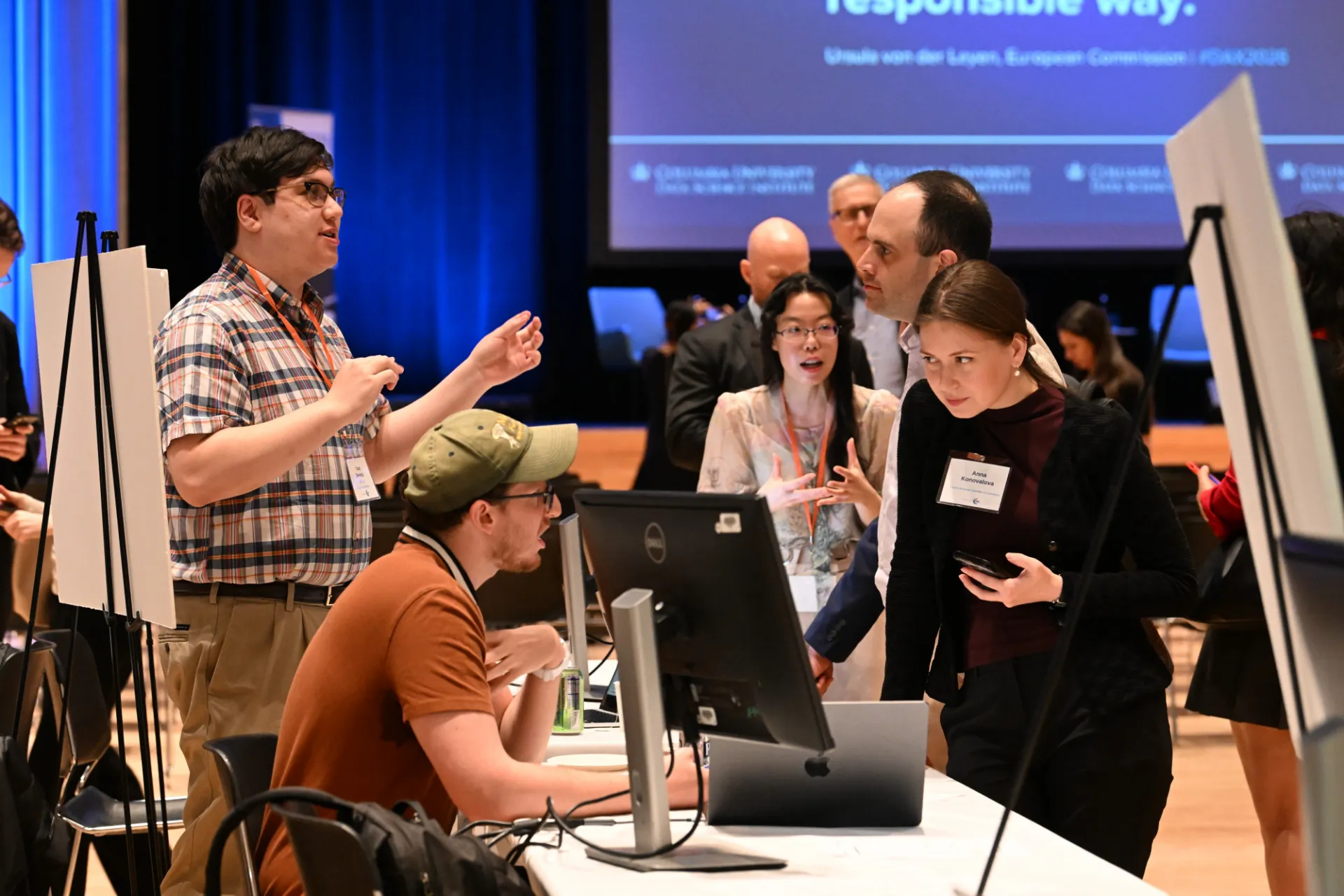

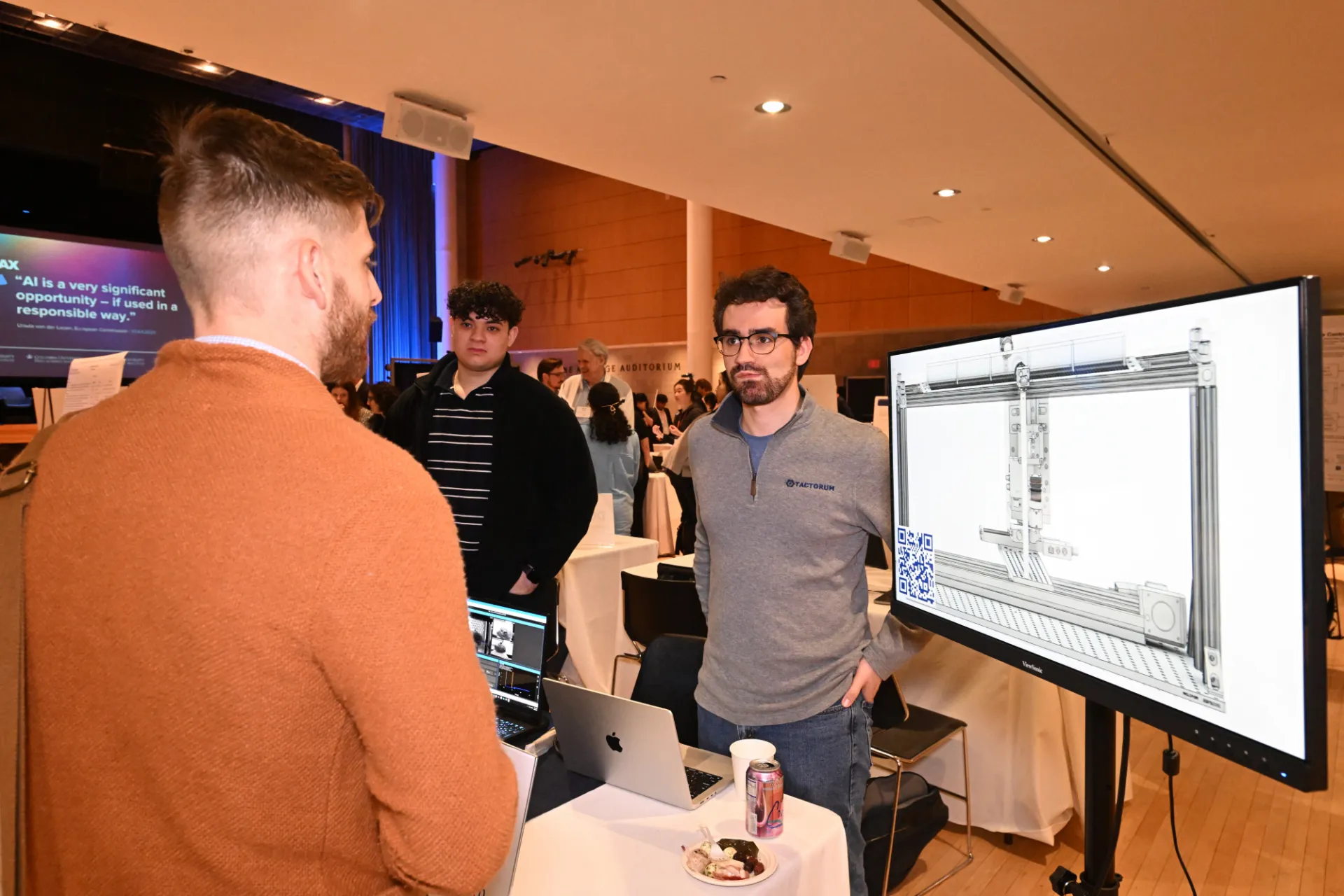

Innovation Expo
The event concluded with an Innovation Expo featuring the latest research from several of Columbia's labs as well as AI focused startups emerging from the University.
An often overlooked mental health crisis among athletes. An inability to assess the level of pain lab rats are in. Doing our taxes. Improving care for patients with diabetes. Tracking climate change risks at the hyper-local level.
These were just some of the fascinating and important problems addressed by the startups who presented during the DAX Innovation Expo, where students and startups had one minute to pitch attendees on what they’re up to, why it’s important, and how to find out more. Followed by a free-form networking session where attendees could meet with early-stage founders and researchers discuss their work, the Innovation Expo was a unique glimpse at what the next phase of AI-enabled problem-solving is going to look like. For anyone interested in an inside look at what's next for these exciting tools and technologies, there was no need to look further than these 24 promising new projects.
For a full list of the featured research and projects, please visit: DAX 2026 | Responsible AI.

DAX 2026 Featured Speakers
Responsible AI | April 14, 2026





Stay connected with the latest insights, ideas, and conversations shaping the future of data science and AI.
Join the DSI Industry Partnerships mailing list to receive exclusive access to the DAX 2026 summary and be the first to hear about upcoming events, announcements, and opportunities from DSI’s Data Science and AI Exchange (DAX).