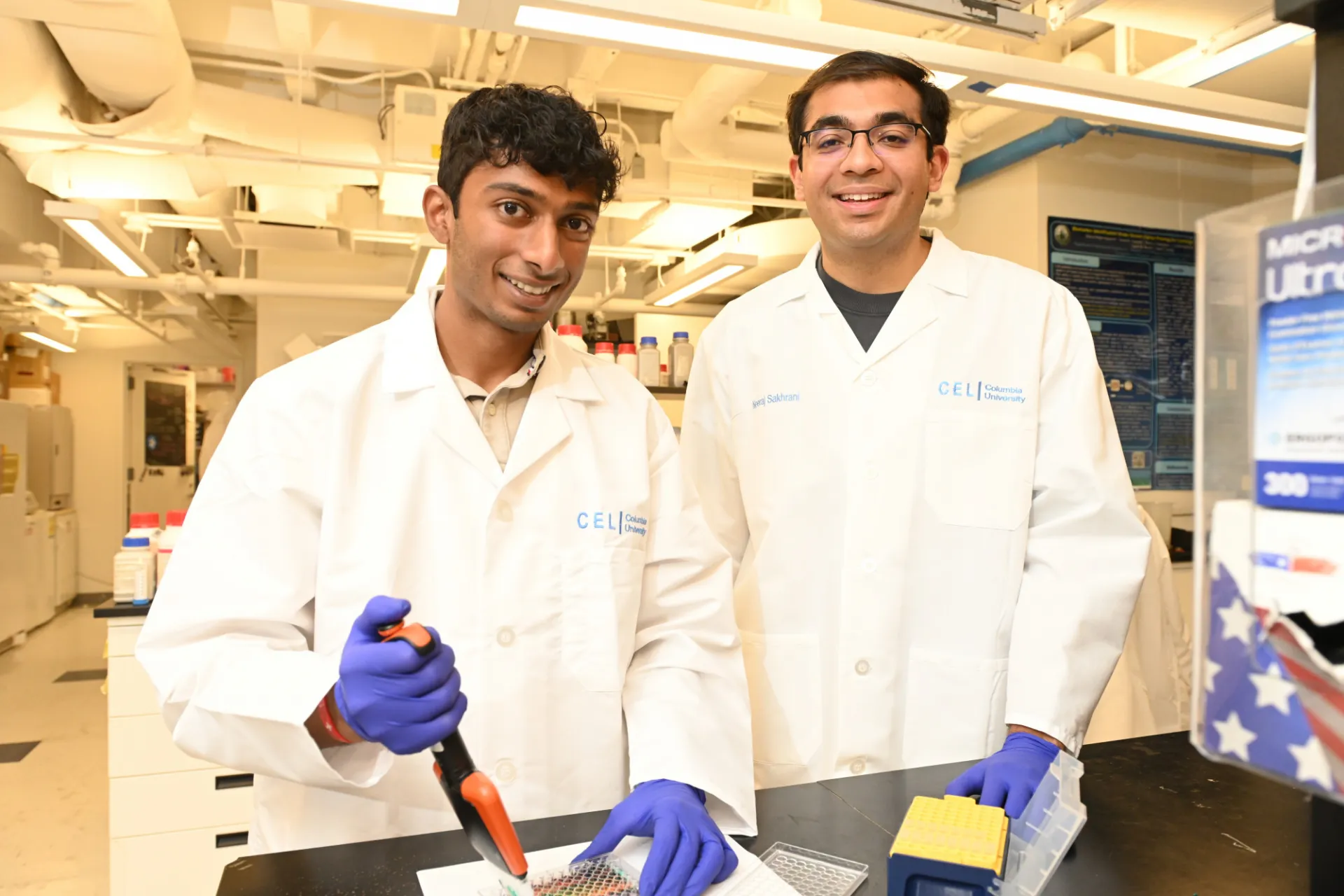
Sponsored Research
Partner to find solutions for which no current commercial solution exists.
Companies sponsor research with academic partners to explore solutions to challenges which no commercial product currently addresses, generate innovations that can be used by the company in its business, or inform the company's own research and development activities.
Companies often leverage sponsored research as an engagement path when they:
- Do not have the internal expertise in a specific area
- Are exploring a new area that may have promise but are not internally staffed to address it
- Have a need to access specialized expertise and/or advanced equipment
- Need to identify and connect with emerging scientific talent that they cannot efficiently develop or maintain in-house
- Are seeking to de-risk early-stage technology development
- Desire to accelerate innovation or address a complex problem
Sponsored research is driven by the discovery of something new—a novel development that can provide the sponsor with new insights or a competitive edge. In contrast, outsourced engineering is a commercial effort centered on delivering a defined, functional product or a specific technical outcome. The University serves as the hub for sponsored research, while a University startup is more likely to be the connection point for an outsourced engineering project.
Why Sponsor Research at Columbia DSI?
Columbia DSI is a leader not only in cutting-edge research, but also the deployment and integration of data science and AI into complex business domains. Sponsoring research at Columbia DSI provides connections to elite researchers and the world-class talent in their labs.
Columbia University excels at applying technology in real-world sophisticated and multi-faceted sectors such as finance, healthcare, life sciences, media, retail, high tech, supply chain, energy, and other data rich industries.
In today's fast paced and rapidly changing world of AI, it is impossible to internally build critical mass to explore all the technologies that can impact your business. Partnering with Columbia DSI can help your organization not only push the boundaries of entirely new technologies but also help improve implementation, performance, and/or efficiency of AI technologies critical to your business.
In sponsoring research at Columbia DSI, your organization plugs into one of the top innovation ecosystems in the country, with research, talent, and startups all in one place—all in New York City!
“No company can master everything alone… making it crucial to build an ecosystem of partners.”
— Pascal Brier, Group Chief Innovation Officer, Capgemini.
Structure of a Sponsored Research Project
A sponsored research project has several defining characteristics:
- A specific scope of work (SOW), developed jointly by the sponsor and the faculty member leading the project
- A clear outline of the resources required and the associated budget
- Defined deliverable(s), which may include a paper, technical report, code, prototype, etc.
- A timeline for when deliverable(s) will be completed and shared with the sponsor
Sponsored Research Agreements (SRAs) are typically negotiated through a dedicated office at the University. Key considerations include:
- Publication rights, which are important for academic partners and can be structured to properly protect the sponsor
- Project time frame
- Confidential or proprietary information and data
- Export controls
- Intellectual property
- Funding requirements
Sponsored research typically follows one of three engagement models: individual, master agreement, or industry consortia.
Types of Sponsored Research
An Individual Sponsored Research Agreement refers to a project with a specific researcher/Principal Investigator (PI) (researcher who can lead a research project). Companies that sponsor research in this manner are typically looking for ways to engage with researchers that create value for their businesses. In collaboration with PIs, they create a scope of work to establish a project that aims to generate innovative technologies. The results of a sponsored research project can be used by the sponsoring company in their business or to inform their own research and development activities. Typically, Intellectual Property (IP) is owned by the University and licensed to the sponsoring company.
In some cases, a company may want to engage with several researchers. In such cases, a master research agreement (MRA) can be an efficient and effective form of engagement. MRAs serve as an umbrella of fixed terms for all projects that fall under that agreement. It's a very efficient way to engage multiple researchers on different projects with different scopes, and not have to negotiate each one separately. This streamlined approach is faster and more efficient compared to managing numerous independent agreements. Additionally, MRAs can also include a process for soliciting or issuing a call for project proposals. This approach can be particularly beneficial to companies by enabling them to review and evaluate multiple different approaches to addressing the challenge they are facing. Often a joint steering committee is formed that is composed of both the sponsoring company representatives and Columbia DSI leadership.
Industry consortia are a unique model of sponsored research where multiple companies sponsor research within a consortia structure. This model can be highly advantageous in certain research areas and long-term projects. This is especially true in emerging technology sectors where research outcomes are likely to be informative and pre-competitive, meaning they are not yet suitable for patent protection. In such cases, companies prioritize the advantages of encouraging communication and collaboration in these evolving fields over the potential commercial benefit of being the sole sponsor. Consortium agreements typically grant the same terms and rights to all sponsors for the same fee. Like all industry-sponsored research, the agreements permit open access and publication to research results, but also promote discussion among consortium members and PIs, and provide early insights into innovative research areas to industry.
How Sponsored Research Works at Columbia
Sponsored research projects arise from a need within a company to connect on a novel discovery. That can be a new technology, a new process, an improvement of existing technology, AI deployment in a specific context or other challenging topics for which there is no "off the shelf" solution. Topics may be identified in discussions between a faculty member, or senior research staff member, and technical managers of a prospective sponsor company. Or, a company representative reaches out to the Industry team at DSI for help in identifying researchers who are working on similar problems.
Once a sponsor company has identified the researcher(s) they wish to engage, the sponsor company's representative(s) and the prospective Principal Investigator (PI) (researcher who can lead a research project) identify topics of mutual interest that the company would like to solve. Typically, after some discussions, the PI drafts a statement of work (SOW) to address the problem within the scoped budget. The sponsor then reviews the draft SOW, provides guidance to the PI, and together a proposal is created. This SOW becomes the basis for the research contract.
Industry Research Agreements/Contracts
At Columbia, the Sponsored Project Administration department (SPA) or, in some cases the Columbia Technology Ventures group, (CTV) helps to structure and negotiate terms of sponsored research agreements so that the sponsor's interests and expectations align with those of the PI and Columbia's policies. Typically these agreements include an option for industry sponsors to negotiate a commercial license to intellectual property (IP) that is created in the performance of the research project.
Reach out to discuss your research needs: Contact Us